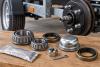

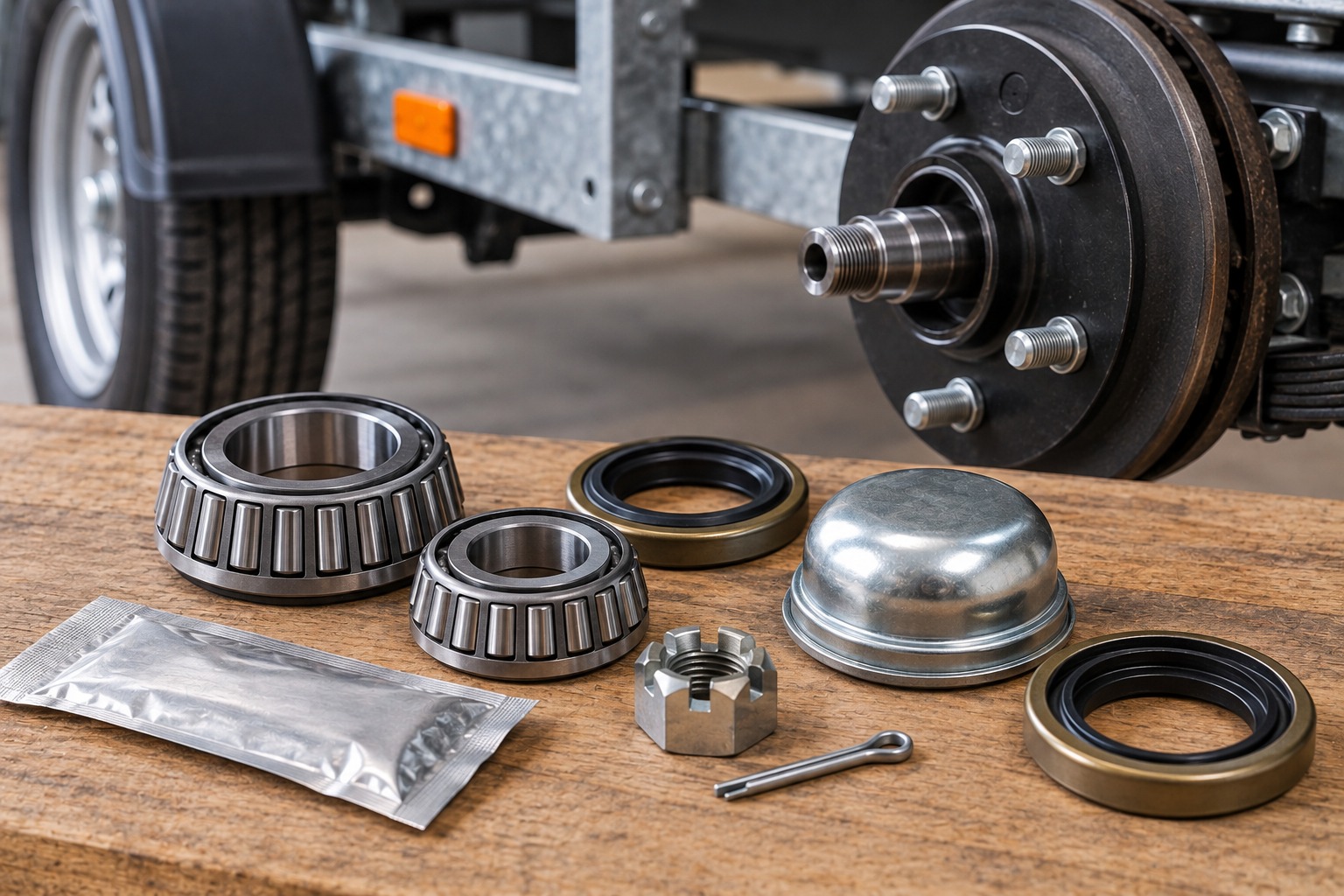
A trailer service kit is a pre-packaged set of hub components — bearings, seals, hub cap, castle nut and split pin — designed to give you everything you need to service one hub in a single order. Rather than sourcing each part individually and risking compatibility issues, a kit is put together for a specific trailer make and axle type, so all the components are confirmed to work together.
Service kits are one of the most practical products in the trailer parts market. If your trailer is due for a hub service, ordering a kit saves time, reduces the risk of ordering the wrong parts, and is almost always cheaper than buying the components separately.
What does a trailer service kit contain?
The exact contents vary between kits and manufacturers, but a standard hub service kit will typically include the following:
|
Component |
What it is |
Why it is included |
|
Inner and outer bearings |
The rolling elements inside the hub that allow the wheel to spin freely on the spindle |
Bearings wear with use and are the most common cause of hub failure. Replacing them at service prevents unexpected failure on the road |
|
Bearing seals / oil seals |
Rubber seals that prevent grease from escaping the hub and water or dirt from entering |
Failed seals allow grease to contaminate brake shoes and allow water into bearings, accelerating wear |
|
Hub cap / dust cap |
A cap that covers the end of the spindle after the bearing is packed |
Protects the bearing from road contamination between services |
|
Castle nut / slotted nut |
The nut that retains the hub on the spindle and controls bearing preload |
Should be replaced rather than reused — a worn castle nut can work loose, causing hub failure |
|
Split pin or R-clip |
The pin that locks the castle nut in position |
Single use — must be replaced each time the hub is removed |
|
Grease (sometimes included) |
Bearing grease compatible with the hub type |
Included in some kits; absent from others — check before ordering if not supplied |
Note on grease: some kits include a sachet of bearing grease, others do not. Always check the kit contents before ordering. The correct grease type varies — standard lithium-based grease is fine for most trailer bearings, but boat trailers should use a waterproof marine grease that resists salt water ingress.
Which kit do I need?
The most important thing is matching the kit to your trailer make and axle type. Using the wrong bearings — even by a fraction of a millimetre — will cause the hub to run incorrectly and fail prematurely. Always confirm your trailer model before ordering.
TrailerTek stocks service kits for the most popular UK trailer brands:
• Ifor Williams service kits — available for box vans, beavertails, car transporters, eurolights, livestock trailers and dropside models across the LT, LM, BV, CT and P-series ranges.
• Indespension service kits — covering Indespension axle types across the most common trailer configurations.
• Brian James service kits — for Brian James car transporters, flatbeds and plant trailers.
If your trailer is not one of the above makes, TrailerTek can source individual bearing components by size. Call us on 01962 774 988 with your trailer make, model and axle specification and we will identify the correct parts for you.
How often should you use a service kit?
For most UK trailers in general use, an annual hub service is the minimum. This means stripping the hub, inspecting the bearings and seals, repacking with fresh grease or replacing the bearings if worn, fitting new seals, hub cap, castle nut and split pin, and reassembling to the correct torque.
Trailers that cover higher annual mileage or are used commercially should be serviced more frequently — every six months is a sensible interval for heavy use. Boat trailers that are regularly submerged in fresh or salt water should be serviced at least once a season, regardless of mileage, because water ingress into sealed bearings is accelerated by immersion even if the bearing shows no visible wear.
The rule of thumb: if in doubt, service it. A bearing kit costs a fraction of the cost of a roadside recovery and a damaged hub.
What is not included in a service kit?
A hub service kit covers the bearing and hub components only. It does not include brake parts. If your trailer also needs new trailer brake shoes or trailer brake cables, these need to be ordered separately. When servicing the hub, it is good practice to inspect the brake shoes at the same time — the drum needs to be removed anyway, so the additional labour is minimal.
A service kit also does not include a replacement brake drum. If your drum shows signs of scoring, cracking or excessive wear, it should be replaced separately as part of the same service.
Can I fit a trailer service kit myself?
Hub servicing is within the capability of a competent DIY mechanic with the right tools. You will need a trolley jack, axle stands, a torque wrench, a bearing press or suitable improvised drift for pressing in the new seals, and the correct torque setting for your trailer's castle nut (check the manufacturer's documentation or call us).
The most common mistake is overtightening the castle nut, which causes the bearing to run hot and fail prematurely. The castle nut should be tightened to the specified torque, then backed off until the next slot aligns with the split pin hole. The wheel should spin freely with a small amount of controlled play when correctly set.
If you are not confident working on wheel hubs, a trailer service centre will carry out the work for you. The cost of a professional hub service is modest compared to the cost of a bearing failure on the road.
Shop trailer service kits at TrailerTek
TrailerTek stocks a full range of trailer parts at TrailerTek, including service kits for Ifor Williams, Indespension and Brian James trailers, as well as individual bearings, seals and hub components for all major UK trailer makes. Call us on 01962 774 988 if you need help identifying the right kit for your trailer.